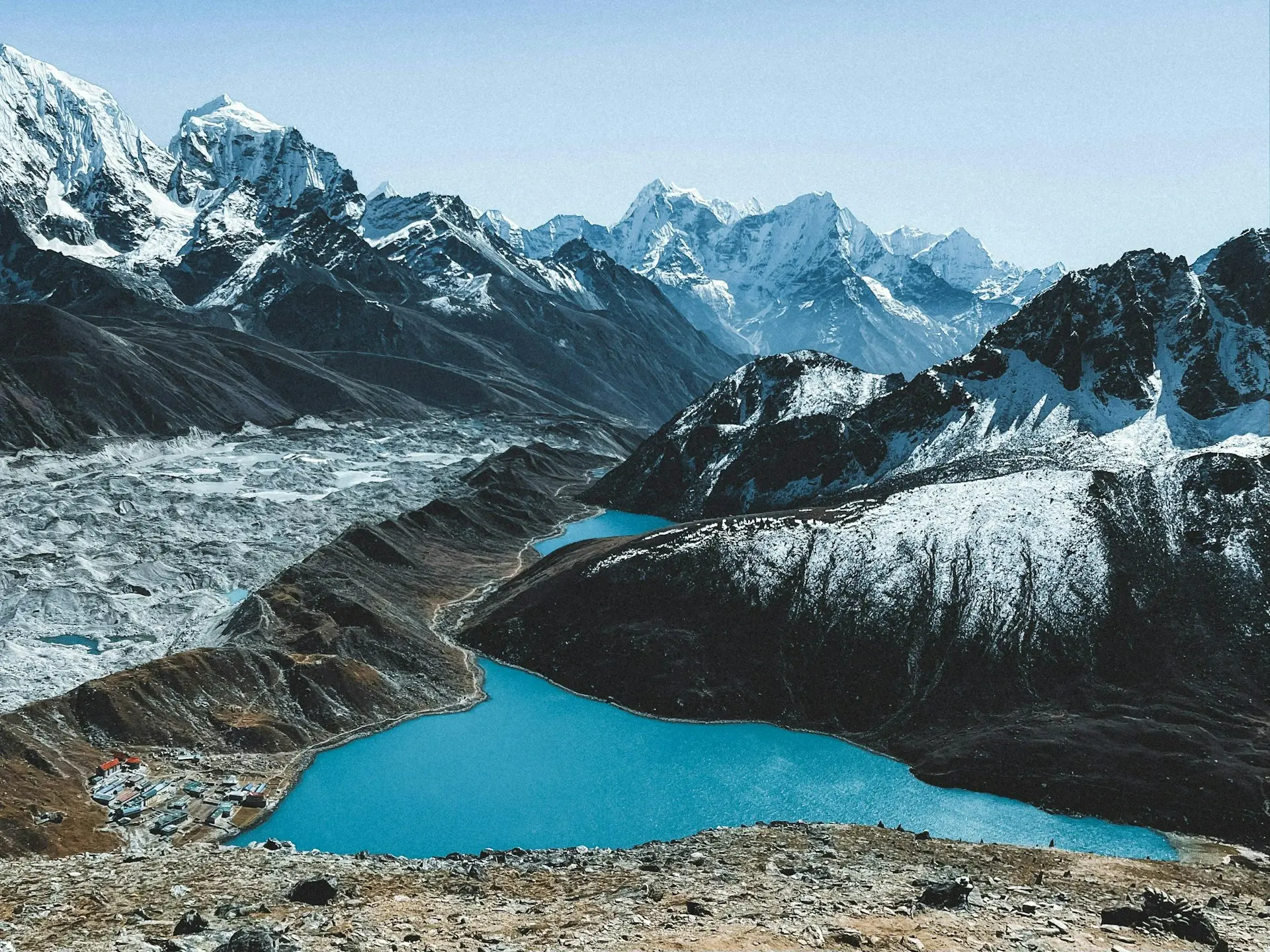
The Everest Base Camp (EBC) Trek via Gokyo Lake is one of the most spectacular trekking routes in the Himalayas, offering trekkers the perfect combination of adventure, natural beauty, and cultural experiences. Unlike the traditional EBC trek, this route takes you through the pristine Gokyo Valley, famous for its turquoise lakes and panoramic views of some of the highest peaks in the world, including Everest (8,848m), Cho Oyu (8,188m), and Lhotse (8,516m). This trek is ideal for those who wish to experience less crowded trails while enjoying breathtaking landscapes, from terraced villages and rhododendron forests to glacial moraines and high alpine terrain.
Along the way, trekkers get to explore the Sherpa culture, visit monasteries, and witness the unique lifestyles of people living in high-altitude villages. The trek combines moderate and challenging trekking days, with opportunities for acclimatization at Namche Bazaar, Gokyo, and other high points to minimize altitude sickness risks. The route also allows an optional climb to Gokyo Ri, which offers a panoramic view of five Himalayan peaks and is considered one of the best viewpoints in the Everest region.
This trek is perfect for adventure seekers, nature lovers, and photography enthusiasts looking for a combination of challenge, culture, and unparalleled scenery.
The best time to embark on the Everest Base Camp Trek via Gokyo Lake is during the pre-monsoon (spring) and post-monsoon (autumn) seasons.
Spring (March to May):
Spring offers pleasant temperatures and blooming rhododendrons that paint the valleys with vibrant colors. Snow on the higher passes and peaks is still manageable, and the skies are generally clear, providing stunning views of Everest and other Himalayan peaks. Wildlife sightings, including Himalayan tahr and colorful birds, are also more frequent in spring.
Autumn (late September to November):
Autumn is considered the peak trekking season, as the monsoon rains have cleared the dust and haze, giving crystal-clear views of mountains. The weather is stable, and temperatures are comfortable, making trekking safer and more enjoyable. The trails are lively, filled with trekkers, but still less crowded than other major trekking destinations globally.
Winter (December to February):
Winter trekking is possible but less recommended unless you are an experienced mountaineer. Cold temperatures, heavy snowfall, and frozen lakes make the trek more challenging, though it offers a tranquil experience with fewer trekkers.
Monsoon (June to August):
The monsoon season is not recommended, as heavy rainfall can make trails slippery, increase the risk of landslides, and reduce visibility of the surrounding peaks.
Seasonal summary:
Choosing the right season ensures safety, better experiences, and unforgettable memories on this incredible trek.
The Everest Base Camp via Gokyo Lake trek is considered moderate to challenging, requiring good physical fitness and endurance. Trekking days range from 4–8 hours, with some days involving steep ascents and descents, especially when crossing Cho La Pass (5,420m). The high-altitude environment means acclimatization is crucial, which is why the itinerary includes acclimatization days at Namche Bazaar and Gokyo Ri.
Difficulty Level:
Transportation:
Tips for trekkers:
The trek demands stamina but rewards trekkers with unmatched scenery, cultural encounters, and the incredible achievement of reaching Everest Base Camp and Gokyo Ri.
During the Everest Base Camp Trek via Gokyo Lake, accommodation is primarily in teahouses and lodges along the trail. These are basic yet comfortable, providing warm beds, shared or private bathrooms, and a cozy place to rest after a long day of trekking. Some teahouses at higher altitudes may have limited facilities, but guides from Nepal Everest Trek ensure that all arrangements prioritize safety, comfort, and hygiene.
Accommodation options:
Food on the trek:
The menu includes a mix of Nepali and international cuisine, catering to trekkers’ dietary preferences. Common meals include:
Tips:
Nepal Everest Trek ensures trekkers have a mix of nutritious, filling meals and cozy accommodations, making the high-altitude journey manageable and enjoyable.
Trekking in the Everest region requires official permits to ensure safety, regulation, and contribution to local communities. The Everest Base Camp Trek via Gokyo Lake involves the following permits:
TIMS (Trekkers’ Information Management System) Card:
Sagarmatha National Park Entry Permit:
Local Area Entry Permits (if needed):
Tips:
Obtaining permits ensures a safe, legal, and responsible trekking experience while supporting conservation efforts and local communities in the Everest region.
Choosing the Everest Base Camp Trek via Gokyo Lake with Nepal Everest Trek guarantees a life-changing experience combining adventure, culture, and pristine natural beauty. Unlike the traditional route, the Gokyo Lake trek offers less crowded trails, scenic lakes, and a chance to cross the challenging Cho La Pass for unparalleled Himalayan vistas.
Reasons to choose this trek:
Nepal Everest Trek focuses on safety, comfort, and authenticity, ensuring trekkers enjoy a well-organized journey while witnessing the grandeur of the Himalayas. Whether you are a first-time trekker or an experienced adventurer, this trek offers unforgettable memories, personal growth, and the sheer thrill of exploring the world’s highest peaks up close.
Clothing
Handwear
Footwear
Gear
Miscellaneous
The trek via Gokyo Lake is considered challenging due to high altitudes, long trekking days, and rugged terrain. While it does not require technical climbing skills, trekkers need good physical fitness, endurance, and mental preparation for long hikes and altitude changes. The trail involves several steep ascents, glacier crossings, and high passes like Cho La Pass. Nepal Everest Trek ensures that trekkers follow a gradual acclimatization schedule, providing guidance and support throughout the trek to minimize altitude sickness and make the journey safe and enjoyable.
While prior trekking experience is not mandatory, it is highly recommended. The Everest Base Camp trek via Gokyo Lake involves walking for 6–8 hours daily on uneven terrain, carrying a light daypack, and enduring cold and windy conditions at high altitudes. Beginners can manage if they are physically fit and properly prepared. Nepal Everest Trek provides detailed pre-trek guidance, training tips, and a well-structured itinerary with acclimatization days to help both beginners and experienced trekkers safely enjoy the adventure.
Yes, altitude sickness can affect trekkers above 3,000 meters, and the Everest Base Camp via Gokyo Lake trek reaches heights above 5,300 meters. Symptoms include headache, nausea, fatigue, and shortness of breath. Nepal Everest Trek prioritizes gradual acclimatization, frequent rest stops, and proper hydration to reduce risks. Guides monitor trekkers for warning signs and can provide advice or medical support if needed. Following the itinerary, avoiding rapid ascents, and listening to your body are crucial for a safe trekking experience in high-altitude environments.
The best time for the Everest Base Camp Trek via Gokyo Lake is during the pre-monsoon (spring) season from March to May and post-monsoon (autumn) season from late September to November. During these periods, the weather is generally clear, offering spectacular mountain views and moderate temperatures for trekking. Spring brings blooming rhododendrons, while autumn has crisp, stable weather. Nepal Everest Trek advises avoiding monsoon months due to heavy rainfall, slippery trails, and higher chances of landslides, which can make trekking unsafe.
Accommodation along the Everest Base Camp via Gokyo Lake route is primarily in teahouses or lodges. These facilities are basic but comfortable, offering warm meals, clean bedding, and communal dining areas. Electricity and Wi-Fi are available in some places but may be limited, especially at higher altitudes. Nepal Everest Trek carefully selects reliable teahouses for the trek to ensure safety, hygiene, and comfort. Staying in local teahouses also gives trekkers a chance to experience Sherpa hospitality, culture, and authentic Nepalese cuisine.
Meals during the trek are typically Nepali, Tibetan, or Western-style, including rice, noodles, soups, and lentil dishes. Breakfasts usually consist of porridge, eggs, bread, and tea, while lunches and dinners include Dal Bhat (rice and lentil soup), vegetable dishes, and occasionally meat. Snacks like chocolate, nuts, and energy bars are recommended. Nepal Everest Trek ensures that trekkers have access to hygienic, nutritious meals at every stop. Trekkers are encouraged to maintain a balanced diet to stay energized for long days of trekking at high altitudes.
Physical preparation is essential for a successful and enjoyable trek. Cardiovascular training, such as jogging, hiking, cycling, or swimming, helps improve stamina, while strength training targets legs, core, and back muscles for uphill and downhill trekking. Practicing with a loaded backpack on hills or stairs simulates real trekking conditions. Nepal Everest Trek recommends starting training at least two to three months before departure and following a gradual routine. Proper preparation reduces fatigue, prevents injuries, and ensures you can fully enjoy the scenic route to Gokyo Lake and Everest Base Camp.
Yes, trekkers require two main permits: the Sagarmatha National Park Permit and the Trekkers’ Information Management System (TIMS) card. Sagarmatha National Park Permit ensures the protection of the region’s environment and wildlife, while the TIMS card monitors trekkers in the Everest region. Nepal Everest Trek assists clients with all necessary permits and documentation, ensuring a smooth start to the trek. Carrying these permits at all times during trekking is mandatory, as park authorities regularly check them along the trail.
Yes, hiring a guide or porter is strongly recommended for safety, convenience, and a more enjoyable trekking experience. Guides from Nepal Everest Trek provide expert knowledge of the route, altitude management, and cultural insights, while porters can carry heavy backpacks, allowing trekkers to focus on the journey. This support is especially helpful on long or steep sections of the trail, during river crossings, and when dealing with changing weather conditions. Having experienced staff ensures a safer and more relaxed trek to Gokyo Lake and Everest Base Camp.
Absolutely. Travel insurance is mandatory for all high-altitude trekking, covering medical emergencies, evacuation, lost baggage, and trip cancellations. The Everest Base Camp via Gokyo Lake trek involves risks associated with high altitude, unpredictable weather, and remote locations. Nepal Everest Trek strongly advises all trekkers to purchase comprehensive travel insurance that includes high-altitude trekking coverage. Having insurance provides peace of mind, ensures access to emergency medical services if needed, and allows you to enjoy the trek with confidence knowing that unforeseen circumstances are financially and logistically managed.
| No of people | Price per person |
|---|---|
| 1 - 1 | $1,545 |
| 2 - 4 | $1,440 |
| 5 - 9 | $1,425 |
| 10 - 15 | $1,410 |
| No of people | Price per person |
|---|---|
| 1 - 1 | $1,725 |
| 2 - 4 | $1,570 |
| 5 - 9 | $1,555 |
| 10 - 15 | $1,540 |